By
Reviewed by Dr. Sabrina Wu, DVM
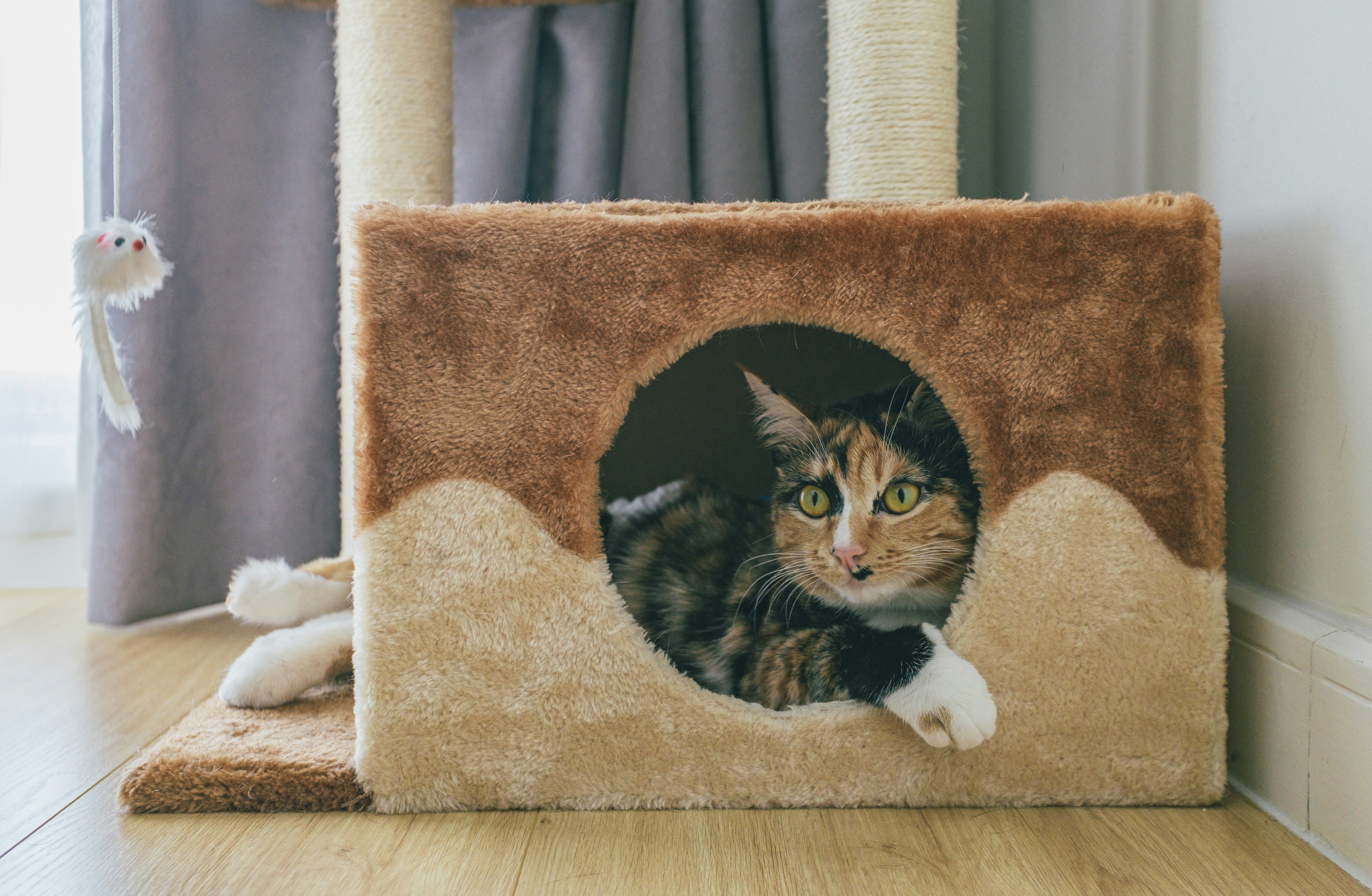
Oof, you just got a new couch and your cat's really taken to it... maybe a bit too much. One day you catch her scratching the side and before you know it, your new couch is shredded. Or you just brought a new kitty home, and he's great, but he's also destroying your rug, your bedframe, and your sanity.
If this has happened to you, you're not alone: 58% of cat parents reported unwanted scratching damage in the home.[1] Furniture is the most commonly scratched item, followed by carpets and rugs,[2] but any household surface can become a scratching post from your cat's point of view.

Why Cats Scratch Things
Cats scratch for physical and behavioral reasons, it's part of being a healthy, happy cat. Scratching is a normal, instinctive behavior to stretch and exercise, maintain claw health, and communicate with other cats through marks and scent.[3] There's nothing wrong with scratching, cats need to do it, but it can become a problem when the scratching is directed towards inappropriate objects (from a human's perspective at least).
A few factors that might make your feline companion more likely to scratch:
- Age: Younger cats tend to scratch more frequently. One survey found that cats over age 7 tended to have fewer reports of scratching problems.[4][1]
- Sex and Neuter Status: Intact male cats engage in scratching more than spayed/neutered cats or females.[2]
- Personality: Just like people, some cats are more active, playful, aggressive, or prone to scratching than others.[4]
- Environment: A stressed cat tends to scratch more. One study found the presence of young children in a household was associated with increased scratching behavior.[4]
If any of these apply, then your cat may need a bit more help from you, e.g. a rambunctious young cat in a busy household may need extra outlets for scratching and stress relief.
What You Can Do
Since scratching is so normal, the goal is to redirect it, not stop it altogether. You can't train a cat not to scratch at all, but you can give them approved places to do it. Since our feline fur babies don't know what targets are and aren't acceptable, we can guide them to appropriate surfaces instead. By observing your cat's natural scratching preferences and providing attractive alternatives, your cat can be convinced there are better targets to scratch than your things.
Entice your cat to scratch approved surfaces:
- Availability and Location: Start with putting a scratcher right next to where you're getting unwanted scratching. Try multiple scratchers in locations where your cat likes to spend time or where scratching is happening. Pet parents who provided additional scratching posts reported fewer scratching problems with their cats.[1] Most cats will use several scratching spots if given the chance.
- Position: Does your cat scratch vertical or horizontal surfaces? One study showed that when offered a choice, more cats preferred upright scratching posts.[5] But every cat is different, and some like variety, so you may want to try multiple options.
- Material: Cats have individual texture preferences, but most seem to prefer the rough fibers of sisal rope and cardboard scratchers.[5] Both sisal and cardboard scratchers come in many options from standalone or wall-mounted posts, to trees and loungers.
- Size and Stability: Large, sturdy, and stable posts that provide resistance when scratching are more likely to attract your cat. If a scratching post wobbles or tips, some cats will even learn to avoid it. For vertical posts, aim for 2.5–3 feet (75–90 cm) in height with a large base, so an adult cat can fully stretch without tipping.[6]
- Attractants: Sprinkling catnip or silvervine on the post may increase your cat's interest and interaction with scratchers.[5] About 50-70% of cats show a positive response to catnip and for those that don't, 75% seem to respond to silvervine.[7]
Every cat is a bit different. By offering a variety of options, you can see which works best for your cat. And when your kitty does use the approved alternatives, positive reinforcement such as praise, pets, or treats can help the habit stick.
Enrich your cat's environment and routine:
- Play and Exercise: Daily play sessions with interactive toys (wands, feathers, things that mimic prey) help cats destress and reduce undesirable scratching.[4] Try short, frequent sessions that end in a successful "hunt".
- Resources and Safe Spaces: Vertical perches like cat trees and hiding spots provide your cat with their own territory and safe spaces, which can especially help in busy households or ones with multiple pets. In multi-cat homes, give each cat plenty of their own resources, from feeding bowls, beds, and litter boxes to vertical spaces, which helps partition resources so cats feel safe and in charge.[8]
- Routine: A predictable, stable routine can help a cat feel more safe and secure at home. Cats have an internal clock and changes in routine can cause anxiety, which can in turn cause stress-related scratching.[9]
Along with approved scratching surfaces, enriching your cat's overall environment can help address urges that lead to scratching. Sometimes, excessive or inappropriate scratching is a cat's way of coping with stress, boredom, or lack of other outlets. Providing enrichment and stimulation can reduce your cat's urge to scratch the wrong things.
Protect your belongings in the meantime:
- Gentle Deterrents: Making off-limits surfaces unattractive or inaccessible, without scaring or harming your cat, may temporarily help redirect your cat while you teach them to scratch approved surfaces. Common environmental deterrents include double-sided sticky tape, furniture covers, or aluminum foil.
- Nail Trimming and Care: Regular nail trimming (every 2–4 weeks) or temporary nail caps on your cat's claws can also reduce the damage from any scratching that does occur.
Together, attractive alternatives, environmental enrichment and stimulation, and gentle deterrents can help get your kitty to start scratching appropriate surfaces instead of your furniture. If you need help, always consult your veterinarian or a certified feline behaviorist.
What Not to Do
Studies and experts agree that punishment and aversives (unpleasant stimuli to discourage unwanted behaviors) are ineffective or even counterproductive for stopping scratching. Punishment such as yelling, chasing, or spraying with water can cause your cat more stress and fear, which in turn can make scratching worse.[1][4] Deterrent sprays (scented solutions applied to a surface meant to repel cats) are considered aversives and can irritate your cat's sense of smell and taste, plus experts say they don't really work.[10]
Physically holding your cat's paws and forcing them to use a scratcher can cause fear and a negative association.[6] Doing this can deter your cat from wanting to use the new scratcher at all. Entice them to the scratcher with toys or treats, but let them decide to scratch it.
Throwing away an old beat-up scratcher can also be a mistake. The used scratcher is a sign of success, plus it looks and smells familiar to your cat.[6] If it's completely falling apart or unsafe, try putting an identical replacement next to the old one.
Leading veterinary organizations and humane societies strongly oppose declawing.[4][6] Declawing (onychectomy) is an amputation surgery and a drastic measure that can lead to chronic pain and behavior changes like increased biting or stress-related problems.
How Long It Takes To See Change
Don't give up too soon. Training a cat takes time and consistency and every cat is different. It might take a few days, weeks, or months for habits to really change.
Remember you're not alone! Try asking Pet Helpr to get custom advice for your cat. If you need more help, always reach out to your veterinarian or a certified feline behaviorist.
Recommended Products That Can Help

Why it's recommended
- 32-inch height allows cats to fully stretch while scratching, meeting their natural vertical scratching needs
- Durable sisal rope surface is liked by most cats and designed to last
- Sturdy base prevents tipping, giving cats confidence to use it regularly
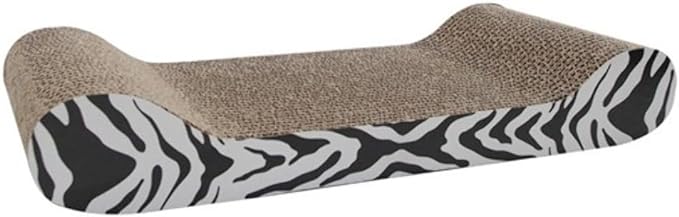
Why it's recommended
- Lounge-like design appeals to cats who prefer horizontal scratching surfaces
- Comes with catnip to attract cats to the scratcher and encourage use
- Affordable option that works well for kittens, adults, and senior cats
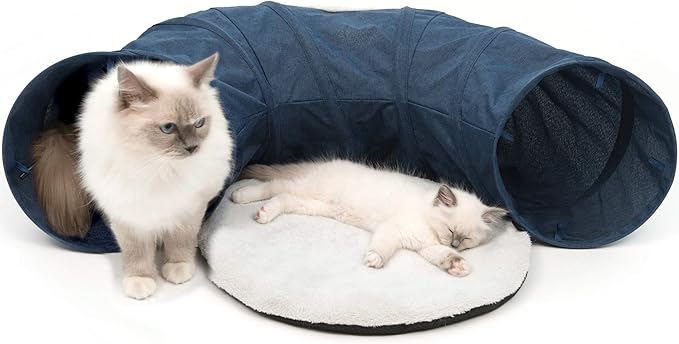
Why it's recommended
- Provides a safe hiding space that reduces stress-related scratching behaviors
- Foldable design makes it easy to store and move around
- Includes a cozy cat bed with a removable cover for easy cleaning
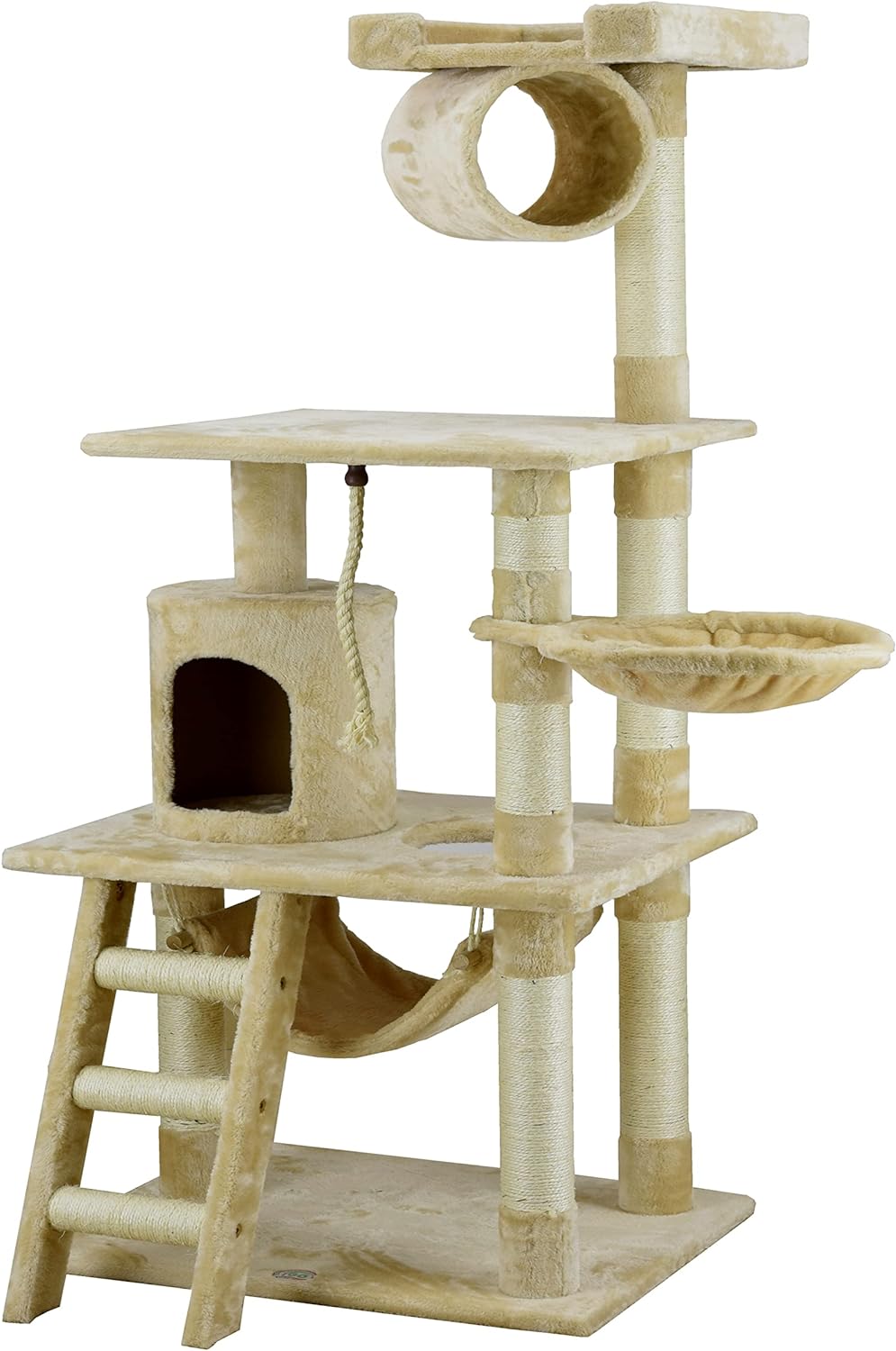
Why it's recommended
- Multiple platforms and hideaways to provide safe spaces and reduce territorial stress-related scratching
- Value for size & features - a lot of cat-usable space for the price
- Stable design with sturdy base and vertical posts, and even weight distribution
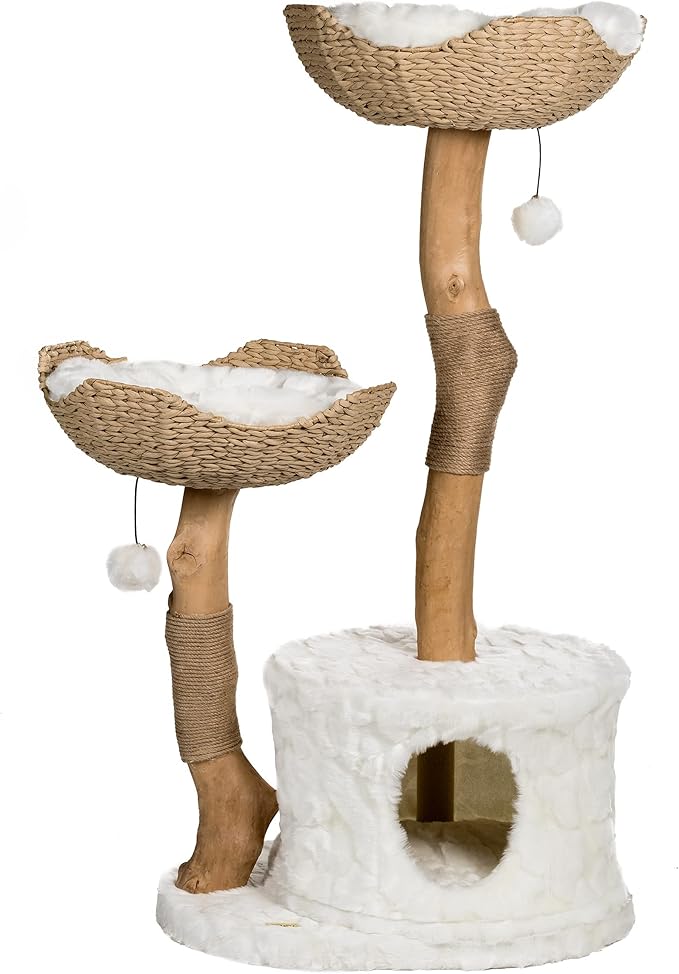
Why it's recommended
- Multiple sisal-wrapped scratching surfaces at different heights meet various scratching preferences
- Provides vertical territory and perches that reduce territorial stress-related scratching
- Modern design that blends with home decor while offering essential scratching outlets
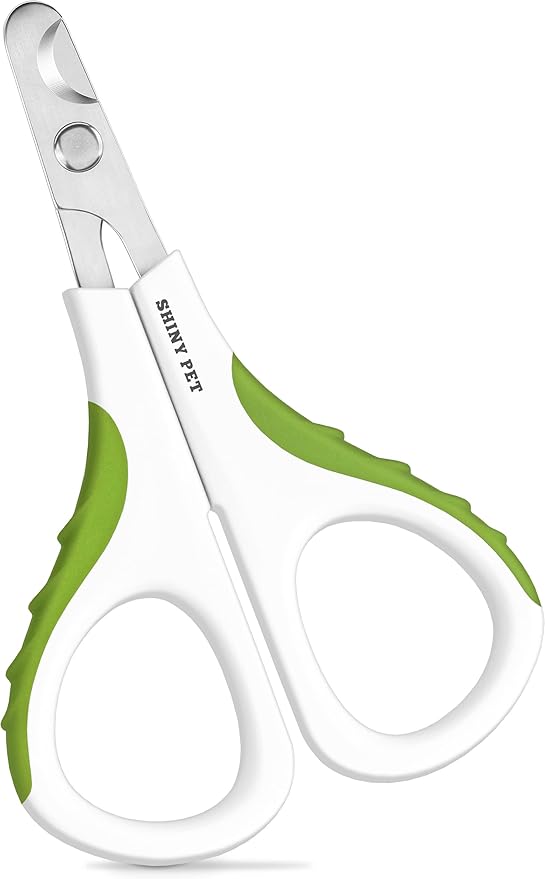
Why it's recommended
- Regular nail trimming (every 2-4 weeks) reduces damage from any scratching that does occur
- Ergonomic design makes trimming easier and less stressful for both you and your cat
- Precise blades ensure clean cuts without splitting, making kitty nail care more comfortable

Why it's recommended
- High-value treats perfect for positive reinforcement when your cat uses approved scratching surfaces
- Single-ingredient, high-protein freeze-dried minnows that work well in puzzle toys for enrichment that reduces boredom-related scratching
- Affordable training reward that helps reinforce good scratching habits
Sources
- Cisneros, A., Litwin, D., Niel, L., & Stellato, A. C. (2022). Unwanted Scratching Behavior in Cats: Influence of Management Strategies and Cat and Owner Characteristics. Animals (Basel), 12(19), 2551. DOI: 10.3390/ani12192551.
- Moesta, A., Keys, D., & Crowell-Davis, S. (2018). Survey of cat owners on features of, and preventative measures for, feline scratching of inappropriate objects: A pilot study. Journal of Feline Medicine and Surgery, 20(10), 891–899. DOI: 10.1177/1098612X17733185.
- Beck, A., De Jaeger, X., Collin, J.-F., & Tynes, V. (2018). Effect of a Synthetic Feline Pheromone for Managing Unwanted Scratching. International Journal of Applied Research in Veterinary Medicine, 16(1), 13–24.
- Salgirli Demirbas, Y., Soares Pereira, J., De Jaeger, X., Meppiel, L., Endersby, S., & da Graça Pereira, G. (2024). Evaluating undesired scratching in domestic cats: a multifactorial approach to understand risk factors. Frontiers in Veterinary Science, 11, 1403068. DOI: 10.3389/fvets.2024.1403068.
- Zhang, L., & McGlone, J. J. (2020). Scratcher preferences of adult in-home cats and effects of olfactory supplements on cat scratching. Applied Animal Behaviour Science, 227, 104997. DOI: 10.1016/j.applanim.2020.104997.
- ASPCA (American Society for the Prevention of Cruelty to Animals). Destructive Scratching. ASPCA.org, Cat Care Section.
- Bol S, Caspers J, Buckingham L, Anderson-Shelton GD, Ridgway C, Buffington CA, Schulz S, Bunnik EM. Responsiveness of cats (Felidae) to silver vine (Actinidia polygama), Tatarian honeysuckle (Lonicera tatarica), valerian (Valeriana officinalis) and catnip (Nepeta cataria). BMC Vet Res. 2017 Mar 16;13(1):70. doi: 10.1186/s12917-017-0987-6. PMID: 28302120; PMCID: PMC5356310.
- Ellis SLH, Rodan I, Carney HC, et al. AAFP and ISFM Feline Environmental Needs Guidelines. Journal of Feline Medicine and Surgery. 2013;15(3):219-230. doi:10.1177/1098612X13477537.
- Catster. Why Do Cats Prefer a Routine? Vet-Reviewed Facts & FAQ. Catster.com, Cat Behavior Section. Updated June 19, 2025.
- Business Insider. The 8 best products to stop cats from scratching furniture in 2025. Medically reviewed. Reviews: Pets Section. Updated Oct 17, 2025.