By
Reviewed by Dr. Sabrina Wu, DVM
Lately, you're finding wet spots on the rug or sprayed against the wall. Or maybe it's a surprise just outside the litter box. You've cleaned, scolded, and even moved the box, but the messes keep happening and now both you and your cat are stressed out.
At least 1 in 10 cats will develop a litter box problem in their lifetime.[1] It's a leading reason cats are surrendered to shelters.[2][3] Pet parents facing this challenge can be understandably frustrated, but the good news is that with intervention, most cats return to consistent litter box use.[4]
Let's unpack why litter box problems happen and how to address them.

Why Cats Pee or Poop Outside the Box
Going "outside the box" is your cat's way of letting you know something's off. Your kitty's behavior may be stemming from medical or other unmet needs (physical or social). Medical issues, instinctual behavior drivers, environmental factors, and learned associations can all be contributors to litter box problems.
- Medical Problems: Since a sick cat can hide their symptoms, a litter box habit change might be a clue that something's wrong. Conditions like UTIs, bladder inflammation, kidney disease, diabetes, constipation, or diarrhea can cause litter box issues. For older cats, arthritis, mobility, or cognitive conditions can make accessing the box harder. A medical issue may also cause your cat to associate the litter box with discomfort or pain, leading to box avoidance.[2]
- Litter Box Environment: Cats have preferences for litter box type, litter texture and smell, as well as box cleanliness. Boxes that are too small, hard to reach, or not cleaned often enough can cause your cat to look elsewhere for a better bathroom spot. Some cats may dislike covered litter boxes or litter box liners.[1][5]
- Box Location and Availability: A noisy, high-traffic, or hard-to-reach area may be less attractive to your cat than a hidden, but human-unapproved, spot. In multi-cat homes, an insufficient number of boxes or box guarding by one of your cats can also make other cats avoid the box as well.[1]
- Stress and Instinctual Behavior: Disruptions to a cat's routine or changes to their environment, litter box set-up, or litter type can cause stress and changes in behavior. Examples include new pets, people, home set-up, schedule changes, or an outside neighborhood cat. Cats may also mark with small amounts of urine (called "spraying") to communicate or establish territorial boundaries. This is different from full urination or defecation outside of the box and has different solutions (more on that below).[2]
Marking vs. Avoiding the Box: What's the Difference?
Not all out-of-box incidents are the same. Since the underlying reasons behind these behaviors are different, knowing the difference can help identify the right solutions for your cat. Here's how to tell them apart:
- Marking usually involves your cat standing upright, quivering their tail, and spraying a small amount of urine on a vertical surface like a wall or door. This is often about stress, territorial signals, or changes in the environment (for example new pets or people). Unneutered males are more prone to marking, and to a lesser extent, unspayed females, but 10% of neutered males and 5% of neutered females also spray.[2][4]
- Box Avoidance looks more like a squatting position and results in a puddle (or pile) on the floor, laundry, or other surface. If your cat's litter box use decreases, or isn't happening at all, then it's likely a litter box aversion or toileting behavior issue.[4]
What You Can Do
Most litter box issues are fixable with a combination of veterinary care, environmental changes, and patience. First, have a conversation with your veterinarian, who can help explain behavioral and medical treatment options for your cat's circumstances. Here are some ways to get your cat back on track:
- Vet Visit: Rule out medical issues and get advice from your veterinarian first. Even if your cat seems otherwise healthy, underlying pain or illness could be to blame. One study found that about a third of cats with litter box issues had an underlying medical condition, despite appearing fine.[6]
- Litter Box Adjustment: Find a box set-up that your cat likes and clean it often, at least once or twice daily. This may mean trying a bigger box, covered vs. uncovered options, different litter depths, or litter types (cats seem to prefer fine-grained, unscented, clumping litter, but every cat is different[7]). Offering a litterbox "buffet" can sometimes help you and your discerning cat find a combo that works for them.
- Litter Box Location: Try quiet, low-traffic, and easily accessible spots for litter boxes that are far away from your cat's food, water, and beds. Avoid putting boxes next to noisy appliances or in locations where your cat may feel cornered or at risk of being ambushed by other pets. If your cat seems to prefer a certain, unapproved location, you can try putting a litter box there and then gradually shift the box to another location.[2]
- Resource Availability: In a multi-cat household, providing enough resources can help avoid conflict between cats. For litter boxes, one box per cat (or social group) plus one extra is a good starting point. Supplying plenty of other resources per cat, such as safe spaces, beds, food, water, scratching posts, and toys, can also reduce stress that may lead to litter box or marking problems. Put each resource in its own location, separate from other resources.[8]
- Stress Reduction: In addition to resource availability, managing your kitty's daily routine, playtime and enrichment, and stress triggers can improve litter box issues and marking behaviors. Feeding and playing with your cat around the same time each day provides stability. Interactive wand toys and puzzle feeders help provide stimulation that can reduce stress for your cat. If there are known triggers, like a new cat, try separating and then gradually reintroducing your cats.[9]
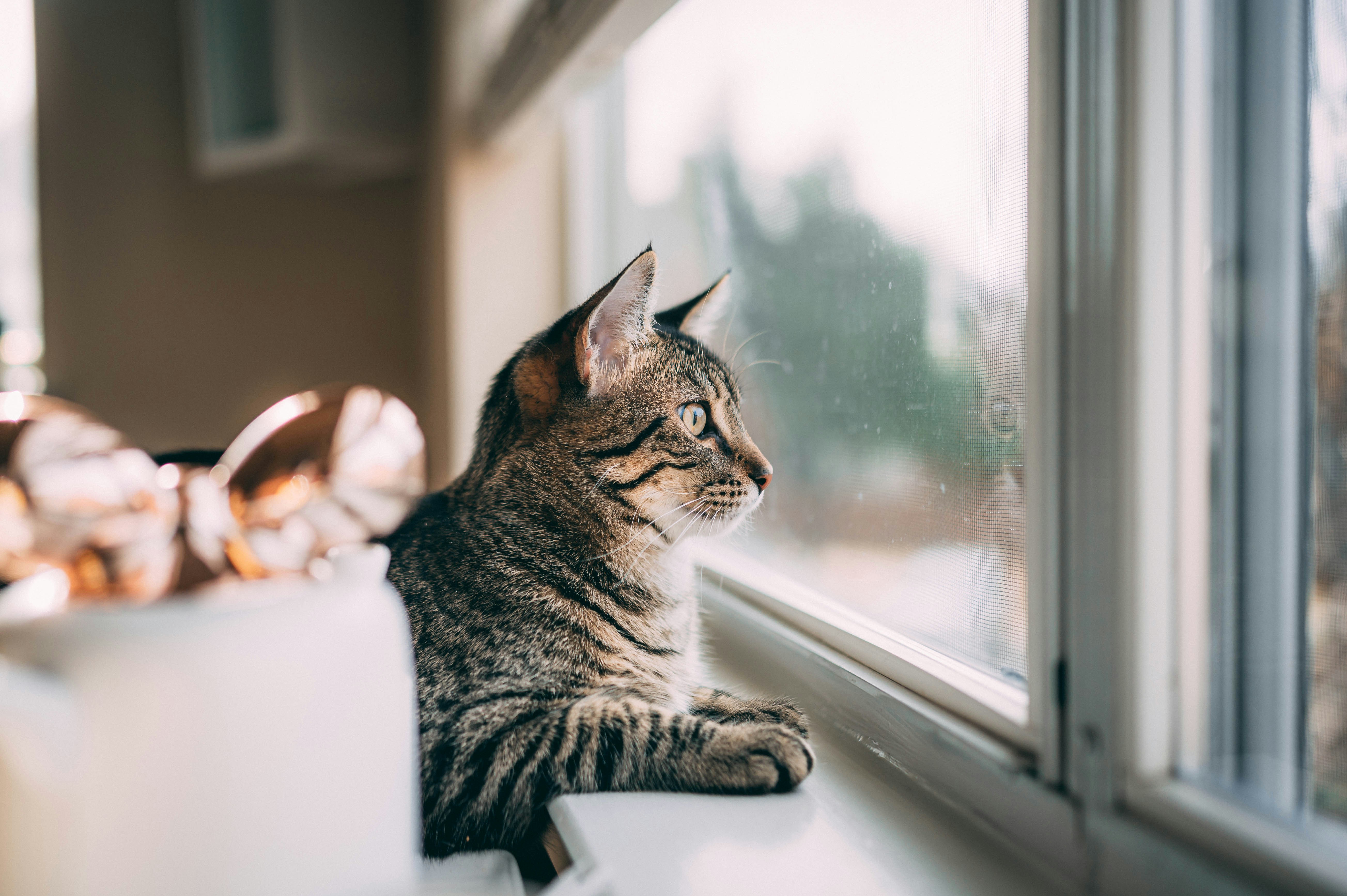
- Environment Factors: Consider other factors in your cat's environment that might be contributing to stress. For example, neighborhood cats through the window, strong smells, or loud noises. Addressing these factors can help make your cat feel more safe, secure, and less likely to engage in stress-related behaviors.[1]
- Retraining: Some cats may need additional help to retrain their habits and get back to regularly using the litter box. You can make old spots unattractive or unavailable so your cat is more likely to choose the approved alternative. Clean soiled areas thoroughly with an enzymatic cleanser to neutralize odors that might bring your cat back to the spot. Place gentle deterrents like aluminum foil or double-sided tape in old accident areas or associate the area with other uses, for example your cat's food, water, bed, or toys.[1]
What Not to Do
Punishment can lead to anxiety and fear, which can make the behavior worse, cause aggression, or redirect your cat's behavior to a less obvious area. Experts recommend positive reinforcement for behavior modification.[10]
Examples of things to avoid: yelling at or hurting your cat, forcing your cat into the litter box, rubbing your cat's face in the accident, or using harsh cleaners that might harm your cat's sense of smell. These types of actions may reinforce your cat's litter box avoidance or marking behaviors, due to stress and negative stimuli. Also avoid ammonia-based cleaners, which can smell like urine to your cat and attract them back to the spot.[10]
Don't give up! Most litter box issues are solvable with the right approach. Try asking Pet Helpr to get custom advice for your cat. If you're stuck or the issue isn't improving, ask your veterinarian or a certified feline behaviorist for advice.
Recommended Products That Can Help
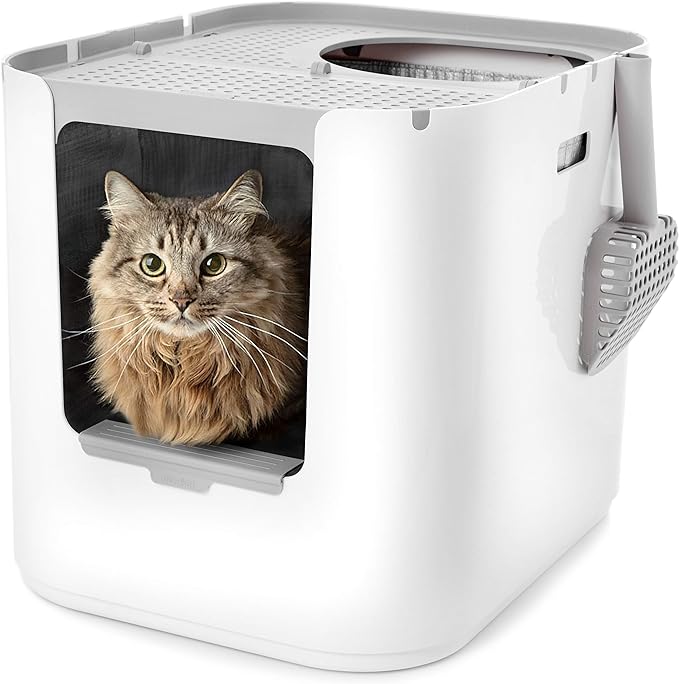
Why it's recommended
- Dual entry options (top or front) give cats flexibility and privacy
- High sides and low-tracking design help contain litter and reduce mess
- Large capacity and odor control features make it appealing for cats and cat parents

Why it's recommended
- Low-entry design makes it easy for senior cats or those with mobility issues to access
- Extra-large size provides ample space for cats who prefer roomier boxes
- Open-top design gives cats a sense of security and escape route
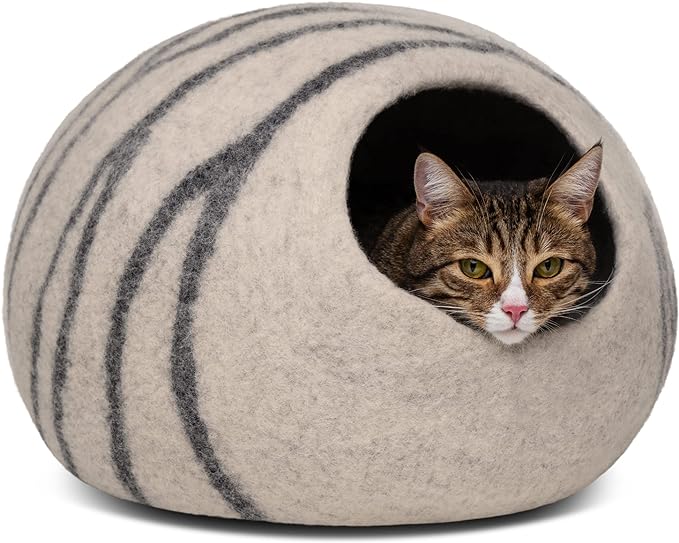
Why it's recommended
- Provides a safe hiding space that gives cats a secure retreat
- Cozy felt design creates a calm environment that can help reduce anxiety-related elimination issues
- In multi-cat homes, having individual safe spaces can reduce stress that leads to marking or box avoidance
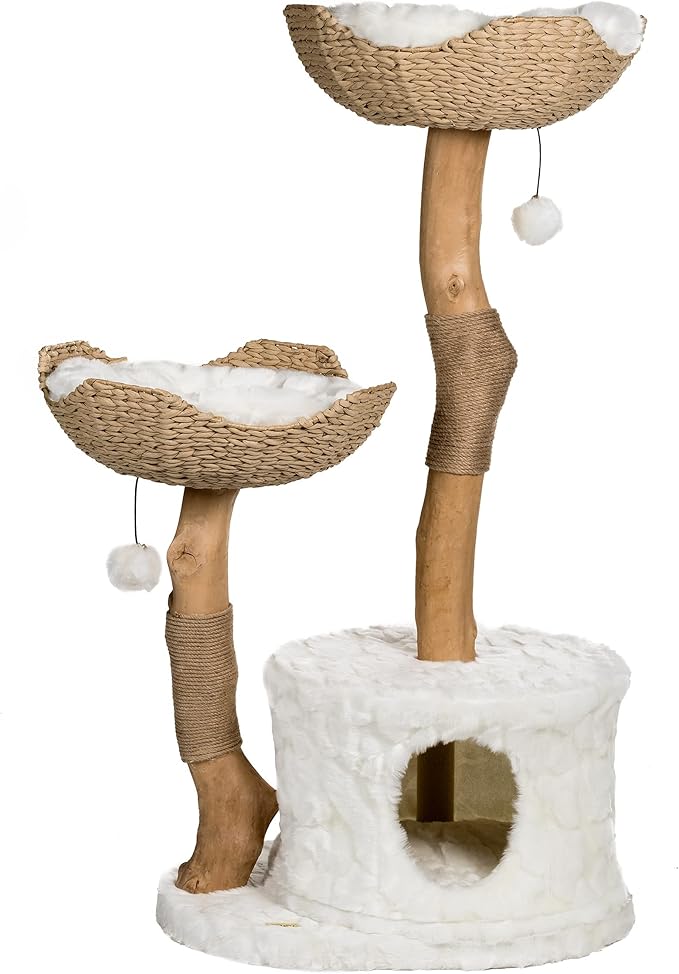
Why it's recommended
- Provides vertical territory and perches that reduce territorial stress
- Multiple levels give cats in multi-cat households their own space, reducing competition and resource guarding
- Attractive, modern design with cozy baskets and sisal-wrapped scratching surfaces

Why it's recommended
- Interactive play sessions help reduce stress and boredom that can contribute to litter box problems
- Replaceable wand heads provide variety to keep your cat engaged
- Prey-like lures provide positive outlets for energy and stimulation

Why it's recommended
- Durable kicker toy provides positive stimulation to reduce stress and boredeom
- Affordable enrichment option that helps satisfy your cat's natural instincts
- Cotton fabric, plant-based dyes, and organic catnip
Sources
- ASPCA. Litter Box Problems. ASPCA, Common Cat Behavior Issues.
- Cornell University College of Veterinary Medicine. Feline Behavior Problems: House Soiling. Cornell Feline Health Center – Feline Health Topics.
- Liu, H.-H., Sung, W., Welsh, S., & Berger, J. M. (2021). A six-year retrospective study of outcomes of surrendered cats (Felis catus) with periuria in a no-kill shelter. Journal of Veterinary Behavior, 42, 75–80.
- Maddie's Fund. Inappropriate Elimination in Cats. Maddie's Fund, Knowledge Base.
- American Animal Hospital Association. General Litter Box Considerations. 2021 AAHA/AAFP Feline Life Stage Guidelines.
- Ramos, D., Reche-Junior, A., Mills, D. S., Fragoso, P. L., Daniel, A. G. T., Freitas, M. F., Cortopassi, S. G., & Patricio, G. (2019). A closer look at the health of cats showing urinary house-soiling (periuria): A case-control study. Journal of Feline Medicine and Surgery, 21(8), 772–779.
- Today's Veterinary Practice. Feline Inappropriate Urination. Today's Veterinary Practice, Behavior.
- Ellis SLH, Rodan I, Carney HC, et al. AAFP and ISFM Feline Environmental Needs Guidelines. Journal of Feline Medicine and Surgery. 2013;15(3):219-230. doi:10.1177/1098612X13477537.
- Humane Society of Missouri. Feline Marking Behavior. Humane Society of Missouri.
- Carney, HC, Sadek, TP, Curtis TM, et al. AAFP and ISFM Guidelines for Diagnosing and Solving House-Soiling Behavior in Cats. Journal of Feline Medicine and Surgery (2014) 16, 579–598.