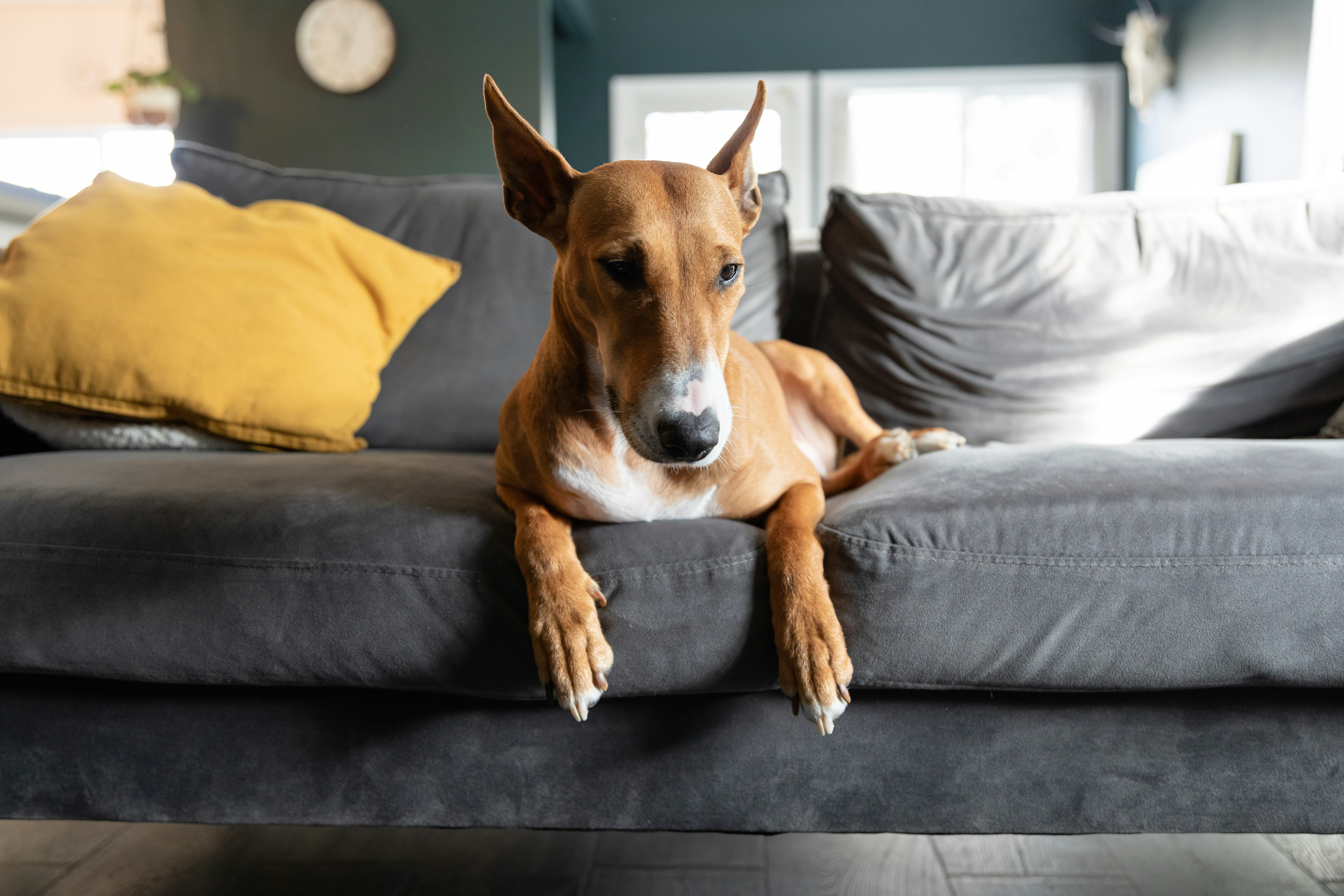
Your alarm goes off, you step out of bed and surprise! Your dog had another accident. You clean it up, take a breath, and remind yourself: this is still new for both of you.
If your dog keeps soiling indoors, it doesn't mean you're failing as a pet parent or that your dog can't learn. For many newly adopted dogs, accidents are simply part of the adjustment process.
House soiling is one of the most common early challenges after adoption. It's one of the top behavior complaints seen by veterinarians and 20% of dog parents experience house soiling at some point.[1] For dogs adopted from shelters, 35% had housetraining problems during the first week after adoption, but the good news is housetraining problems decreased to <10% after 1 month as dogs adjusted and were trained.[11]

Why Dogs House Soil
House soiling isn't a single behavior, instead it can have multiple underlying causes. A dog may pee or poop indoors because they:
- Don't understand the bathroom routine yet
- Are stressed or overwhelmed by change
- Were never reliably housetrained
- Are marking territory
- Are reacting emotionally (fear, excitement, separation distress)
- Have an underlying medical condition
Your dog may also be experiencing a combination of the reasons above. Understanding the causes for your pup's house soiling can significantly improve house training success rates, so let's get to the bottom of different house soiling types and why they happen.[1][4]
Common Types of House Soiling
Dogs may exhibit more than one type of house soiling, particularly during the first several weeks post-adoption, but with consistent supervision, predictable routine, and positive reinforcement, most dogs can be housetrained within 4–8 weeks.[1] Common types of house soiling include:
Adjustment Period Stress
Adoption can be a major physiological and psychological stressor. Dogs experience elevated stress hormone levels for 3–7 days after entering a new home and some need several weeks to return to baseline.[2]
Behavioral studies show that 30–40% of newly adopted dogs have at least one new or intensified behavior problem during the first 3 months, such as house soiling, vocalization, clinginess, or reactivity.[2][3] This "decompression" period is normal and usually improves within a few months.
Incomplete Housetraining or an Environmental "Reset"
Some dogs were never fully housetrained. Others were trained previously but may not automatically apply that training to a new environment or understand the different routine.[4]
For example if you adopted your pup from a shelter, they may have had to eliminate in their kennels, disrupting their housetraining habits or natural inhibition. Because of this, a full housetraining reset is recommended for the first few weeks post-adoption, even for adult dogs.[13][14]
Fear-Based or Separation-Related Accidents
Some dogs have accidents when they're left alone or emotionally overwhelmed. In the early weeks post-adoption, 25% of dogs exhibit some separation-related behaviors, ranging from mild vocalization to full panic responses.[3][6]
These types of accidents often happen even if a dog recently "went" outdoors and are accompanied by pacing, drooling, destruction, or escape attempts.
Urine Marking
Urine marking typically involves small amounts of urine, often on vertical surfaces, and is linked to insecurity, unfamiliar scents, or social stress. While more common in intact males, neutered dogs still mark, particularly after environmental changes like moving to a new home.[1]
Marking often decreases as dogs feel more secure, especially when combined with supervision, enzymatic cleaning, and housetraining.
Submissive or Excitement Urination
This involuntary behavior occurs during moments of emotional overload and is most common in puppies, adolescents, and timid dogs. A pup with this response isn't peeing on purpose and confidence-building and stress management can reduce this behavior over time.
Submissive urination can happen when a dog is fearful or anxious, while excitement urination may happen during greetings or overstimulation. Interestingly, both of these involuntary responses can happen simultaneously and overwhelm your dog.
For these types of urination, try a calm, neutral voice when greeting your dog. Introduce visitors slowly and avoid loud noises, sudden movements, and direct eye contact.[4] Avoid punishment, which can actually increase fear and make submissive urination worse.[1]
Medical Causes (Always Rule These Out)
Medical causes account for a substantial portion of sudden house soiling in adult dogs, especially when accidents begin abruptly or occur during sleep.[4][7] Medical conditions that can cause house soiling include:
- Urinary tract infections
- Gastrointestinal parasites
- Food intolerance
- Diabetes or kidney disease
- Age-related incontinence
If your pup has persistent or sudden accidents, especially a previously housetrained adult, first check with your veterinarian to rule out underlying medical causes.
How to Stop Indoor Accidents: Housetraining Tips
Once you understand why your dog is soiling indoors, the next step is helping them succeed by providing clarity, routine, and prevention.
- Start From Scratch (Even With Adult Dogs): Dogs may not automatically transfer housetraining skills between environments. When introducing your pup to a new environment, try providing fresh training and starting with the basics.[4][5]
- Establish a Predictable Potty Routine: Dogs with predictable feeding and potty schedules have higher housetraining success rates.[8] Take your dog outside immediately after waking, before bedtime, and 10-15 minutes after each meal and playtime. For new dogs, try going outside every 2–3 hours during the day. Once your dog has gone 8 weeks accident-free, then you can gradually reduce the outdoor trips.[1]
- Learn Your Dog's Habits: Try to understand your pup's elimination pattern, so you can plan your outings according to your dog's needs. Most dogs defecate 1-3 times a day and usually after a meal.[4]
- Supervise Closely While Housetraining: Until your dog is reliable, close supervision can help you prevent indoor accidents, intervene when accidents occur, and redirect pup to approved soiling spots. When supervision isn't possible, introducing your dog to a safe and humane confined space, such as a gated room, playpen, or comfortable crate, can minimize damage during the housetraining phase.
- Positively Reinforce Success: When your dog "goes" outdoors or where instructed, reward them within 1–2 seconds to strengthen learning the habit. Dogs trained with positive reinforcement learn faster and retain behaviors longer than those trained with punishment-based methods.[9]
- Post-Accident Actions: If your pup's already had an accident, avoid interacting with them or giving them attention. Clean the area with an odor-eliminating, enzymatic cleaner, since dogs are more likely to re-soil areas that have residual odors.[4][10]
- Never Punish Accidents: Punishment increases fear, stress, and avoidance. Research links aversive training methods to higher cortisol levels, increased anxiety behaviors, and poorer learning and training effectiveness.[9] Instead, if you catch your dog in the act, interrupt them with a sound, clap, or whistle and bring them to the right spot.
Indoor accidents after adoption are common and solvable. It may take some time for your dog to learn how to live in a new world with new rules, but with patience, consistency, and training, most dogs improve substantially within weeks and can be fully housetrained within 4-6 months.[15]
Recommended Products That Can Help

Why it's recommended
- Small, soft treats are perfect for rewarding your dog immediately when they eliminate outdoors
- High-value rewards help reinforce positive housetraining behaviors and strengthen the habit
- Comes in a variety of flavors and in a reasealable bag
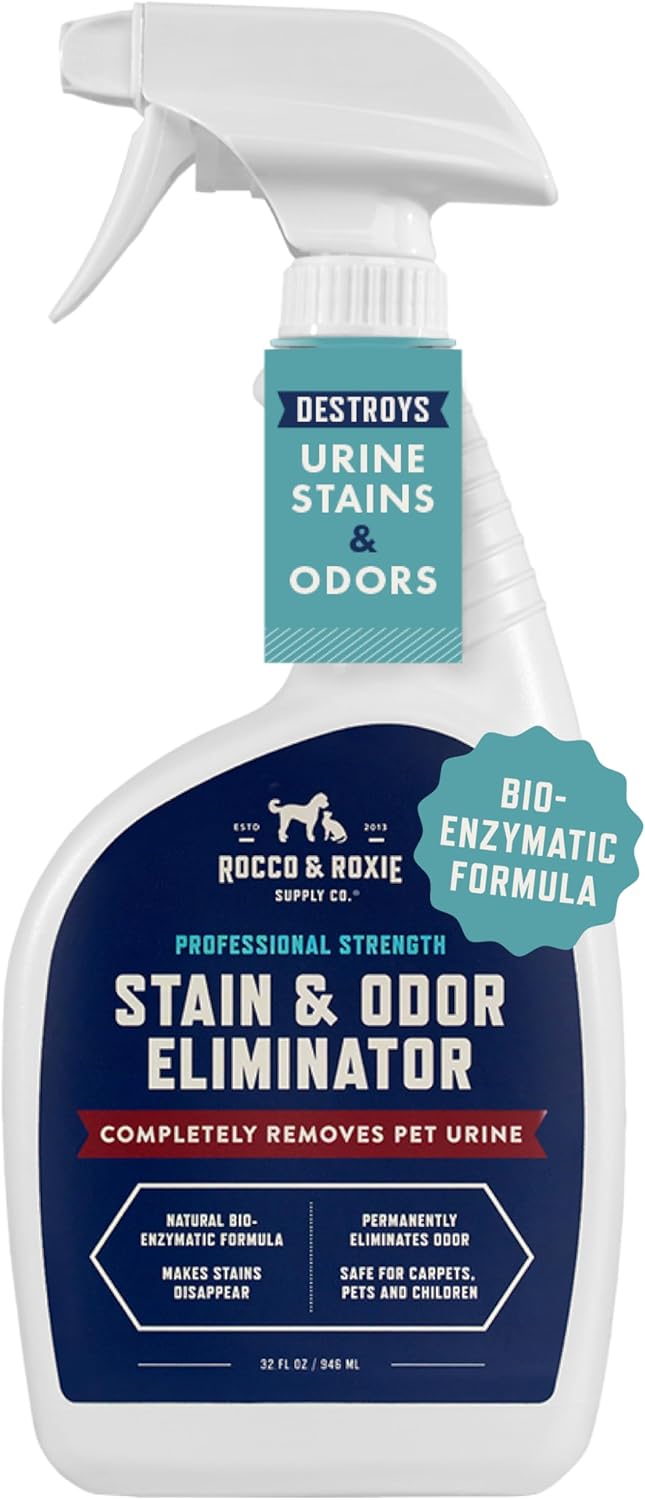
Why it's recommended
- Fast-acting enzymatic cleaner that breaks down odors that can cause dogs to re-soil the same areas
- Safe for carpets and multiple surfaces to clean accidents throughout your home
- Pricey compared to other cleaners, but comes with a money-back guarantee
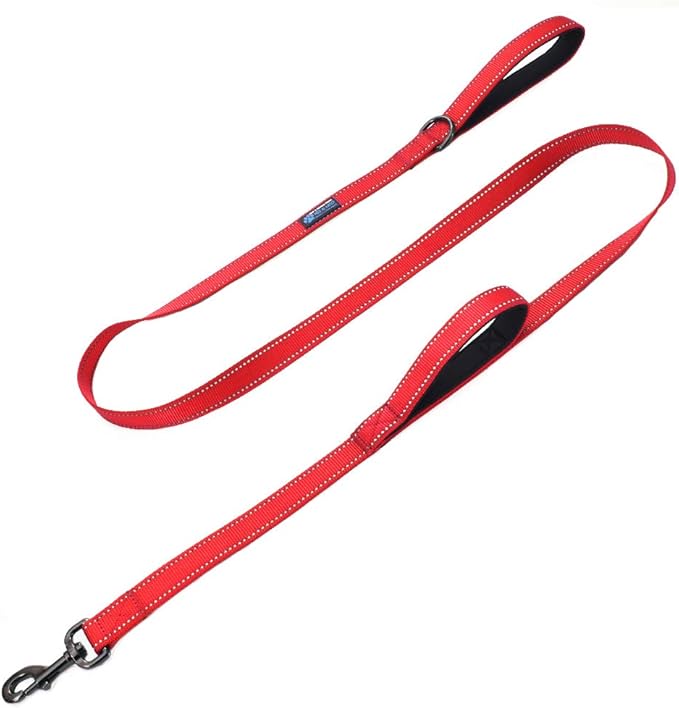
Why it's recommended
- Double handle design provides better control during frequent potty breaks, helping you guide your dog to the right spot
- Traffic handle near the collar offers quick control when your dog needs to stop and eliminate during walks
- Reflective material improves visibility for early morning and evening potty trips
Sources
- Ballantyne, K.C. (2017). Canine House Soiling: Back to Basics. Today's Veterinary Practice.
- Hennessy, M.B., Voith, V.L., Mazzei, S.J., Buttram, J., Miller, D.D., & Linden, F. (2001). Behavior and cortisol levels of dogs in a public animal shelter, and an exploration of the ability of these measures to predict problem behavior after adoption. Applied Animal Behaviour Science.
- Patronek, G.J., Bradley, J., & Robertson, S.A. (2022). Saving Normal: Reassessing behavioral reasons for relinquishment of dogs. Journal of Veterinary Behavior.
- VCA Animal Hospitals. Dog Behavior Problems: House Soiling.
- ASPCA. Housetraining Your Dog or Puppy.
- Teixeira, C.P., & Hall, N.J. (2021). Estimates of separation anxiety prevalence and risk factors in dogs. Journal of Veterinary Behavior.
- American Animal Hospital Association (AAHA). Urinary Incontinence in Dogs & Crate Training Your Dog.
- Ohio State University - Indoor Pet Initiative. Housetraining Dogs.
- American Veterinary Society of Animal Behavior (AVSAB). (2021). Position Statement on Humane Dog Training.
- University of California, Davis - School of Veterinary Medicine. Urine Marking in Dogs.
- Lord, L.K., Reider, L., Herron, M.E., & Graszak, K. (2008). Evaluation of adopters' expectations and experiences with dogs adopted from animal shelters. Journal of the American Veterinary Medical Association (JAVMA).
- VCA Animal Hospitals. Dog Behavior Problems - Submissive, Excitement, and Conflict Urination.
- Paws.org. Re-housetraining Your Adult Dog.
- Wisconsin Humane Society. Housetraining For Adult Dogs.
- Humane World For Animals (formerly Humane Society of the United States). How to Potty Train a Puppy: Essential Housebreaking Tips for Success.